

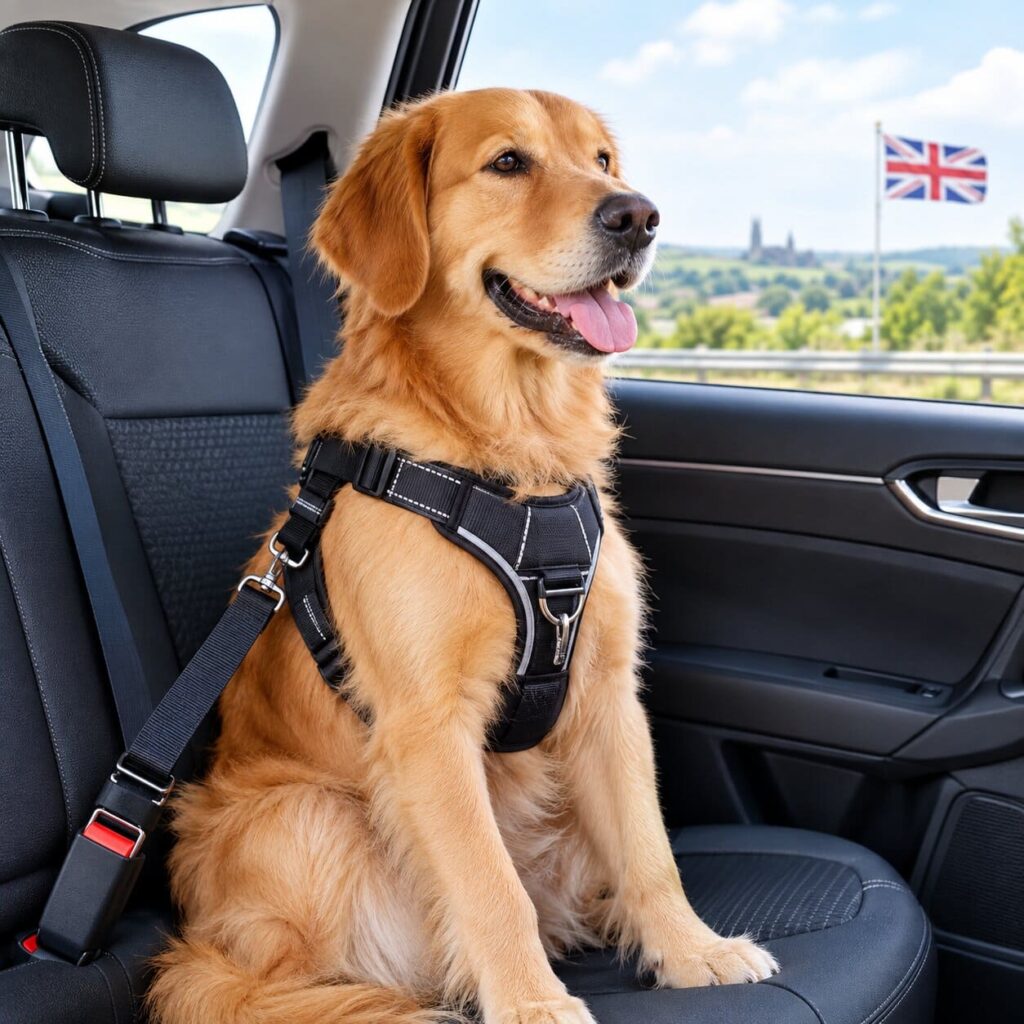
For many dog owners, getting in the car with their pet is just part of normal life. It could be a quick trip to the vet, a visit to family, a day out, or a long drive across the UK. Whatever the reason, your dog needs to be safe and comfortable from the moment you leave home until you reach your destination.
Dogs don’t always realise that a moving car isn’t a place to wander around. They may try to climb into the front, move between seats, or become unsettled when the car brakes. Apart from putting your dog at risk, this can also distract the driver.
That’s why a little preparation before setting off can make a big difference.
What Does the UK Highway Code Say About Dogs in Cars?
Highway Code Rule 57
Highway Code Rule 57 advises drivers to make sure dogs and other animals are suitably restrained while travelling in a vehicle.
The reason is pretty simple. An unrestrained dog can distract the driver or be injured if the vehicle suddenly stops. In some situations, an animal could even interfere with the driver’s ability to control the car.
The Highway Code suggests using a suitable pet carrier, dog cage, or harness.
So, while there isn’t a simple rule saying every dog must wear a particular type of restraint, allowing your dog to roam freely around the vehicle isn’t a sensible choice.
Can You Be Fined for an Unrestrained Dog?
There’s no standard fixed “dog in car fine” that automatically applies whenever a dog isn’t restrained. However, if your dog distracts you and contributes to careless or dangerous driving, you could face consequences under wider road-traffic laws.
In other words, it’s far better to secure your dog before you start driving than deal with a preventable problem later.
What Is the Best Way to Restrain a Dog in a Car?
There’s no single setup that’s right for every dog. A small Yorkshire Terrier, for example, may be perfectly happy in a carrier, while a large Labrador may need a harness or a properly secured boot area.
Seat-Belt Harness and Tether
A properly fitted dog car harness is a popular option for dogs travelling on the rear seat. When connected to a suitable seat-belt tether, it can stop your dog from climbing into the front of the car.
Make sure the harness fits comfortably and allows your dog to sit, stand, and lie down. Don’t attach a restraint directly to an ordinary collar, as a suitable harness is generally a better choice for travelling.
Car Seat or Rear-Seat Hammock
Small dogs may feel more secure in a dedicated car seat. It gives them their own space and can help prevent them from moving around the cabin.
A rear-seat hammock is useful too, especially if you want to protect the seats from muddy paws and loose hair. However, a hammock isn’t a restraint by itself. Your dog should still be secured with an appropriate harness or another suitable system.
Rigid Crate or Carrier
A rigid crate or carrier can be ideal for dogs that are already comfortable spending time in one.
Choose a carrier that’s large enough for your dog to stand, turn around, and lie down comfortably. It should also be secured properly so it can’t slide around when you’re driving.
If your dog already uses the crate at home, taking the same familiar space in the car can make things much easier.
Boot Dog Guard
For larger dogs, the boot of an estate car or SUV may provide more room. A properly fitted dog guard can separate the boot from the passenger area and prevent your dog from climbing towards the driver.
Make sure the boot has enough ventilation and isn’t too hot or cramped. Your dog still needs to travel comfortably.
Where Is the Safest Place for a Dog in the Car?
For many dogs, the back seat is a practical option. It keeps them away from the driver and reduces the chance of them interfering with the steering wheel, pedals, or other controls.
The front passenger seat is generally best avoided. Apart from being close to the driver, an airbag can create additional risks during a collision.
Wherever your dog travels, the key is to make sure they’re properly secured and can’t move freely around the vehicle.
What Are the Best Dog Car Safety Tips?
Good equipment is important, but how you use it matters just as much.
Before every journey, check the harness, tether, clips, buckles, straps, and attachment points. If anything looks worn, cracked, loose, or damaged, replace it.
It’s also worth checking the fit of your dog’s harness from time to time. Puppies and young dogs can outgrow equipment surprisingly quickly.
On longer journeys, keep the car well ventilated and make sure your dog has access to fresh water. Avoid sudden, aggressive braking where possible and try to keep your driving smooth.
How Can You Help a Nervous Dog Get Used to Car Travel?
Some dogs love jumping into the car. Others need a bit more time.
If your dog is nervous, don’t start with a three-hour journey. Let them sit in the stationary car for a few minutes first. Once they’re comfortable, try a short drive around the local area.
A familiar blanket or favourite toy can also help. Keep your voice calm and don’t punish your dog if they’re frightened.
With regular short trips, many dogs gradually become much more confident travellers.
How Often Should You Stop on a Long Journey?
Long car journeys need regular breaks. Stopping roughly every two hours gives your dog an opportunity to stretch their legs, drink some water, and go to the toilet.
Some dogs may need more frequent breaks, particularly puppies, older dogs, or pets that struggle with travelling.
Always put your dog’s lead on before opening the car door. Even a normally calm dog can bolt when they’re somewhere unfamiliar.
Can You Leave Your Dog Alone in a Parked Car?
It’s best not to leave your dog alone in a parked car.
Vehicles can become dangerously hot surprisingly quickly, even when the weather outside doesn’t feel particularly warm. Leaving the window slightly open isn’t a reliable way to keep the temperature safe.
If you’re travelling with your dog, plan your stops around places where your pet can stay with you.
What Should You Pack for a Long Dog Journey?
A little planning can save plenty of hassle. For a longer trip, take:
- Fresh water and a travel bowl
- Your dog’s usual food
- Lead and collar
- Harness, crate, or carrier
- Waste bags
- Familiar bedding
- Towels
- Any regular medication
- Identification details
- Basic cleaning supplies
Keeping everything within easy reach means you won’t have to rummage through the car when you need something.
What About UK and European Pet Travel?
Long-distance journeys between the UK and Europe require extra planning. Along with keeping your dog safely restrained, you’ll need to consider rest stops, food, water, temperature, travel documents, and the rules that apply to your destination and route.
If you’d prefer someone experienced to handle the journey, UK and Europe Pet Taxi provides specialist pet transport for journeys across the UK and between the UK and Europe.
Final Thoughts on Dog Car Safety UK
Keeping your dog safe in the car doesn’t have to be complicated.
Choose a suitable harness, carrier, crate, or dog guard for your pet. Keep your dog away from the driver’s area, check their equipment regularly, take breaks on longer journeys, and never leave them alone in a parked car.
Most importantly, don’t introduce new equipment for the first time on the morning of a big trip. Give your dog a chance to get used to it beforehand.
A little preparation goes a long way. Your dog will be safer, you’ll be able to concentrate on the road, and the journey should be much more relaxed for everyone. Read more: Safe Dog Car Travel in the UK