

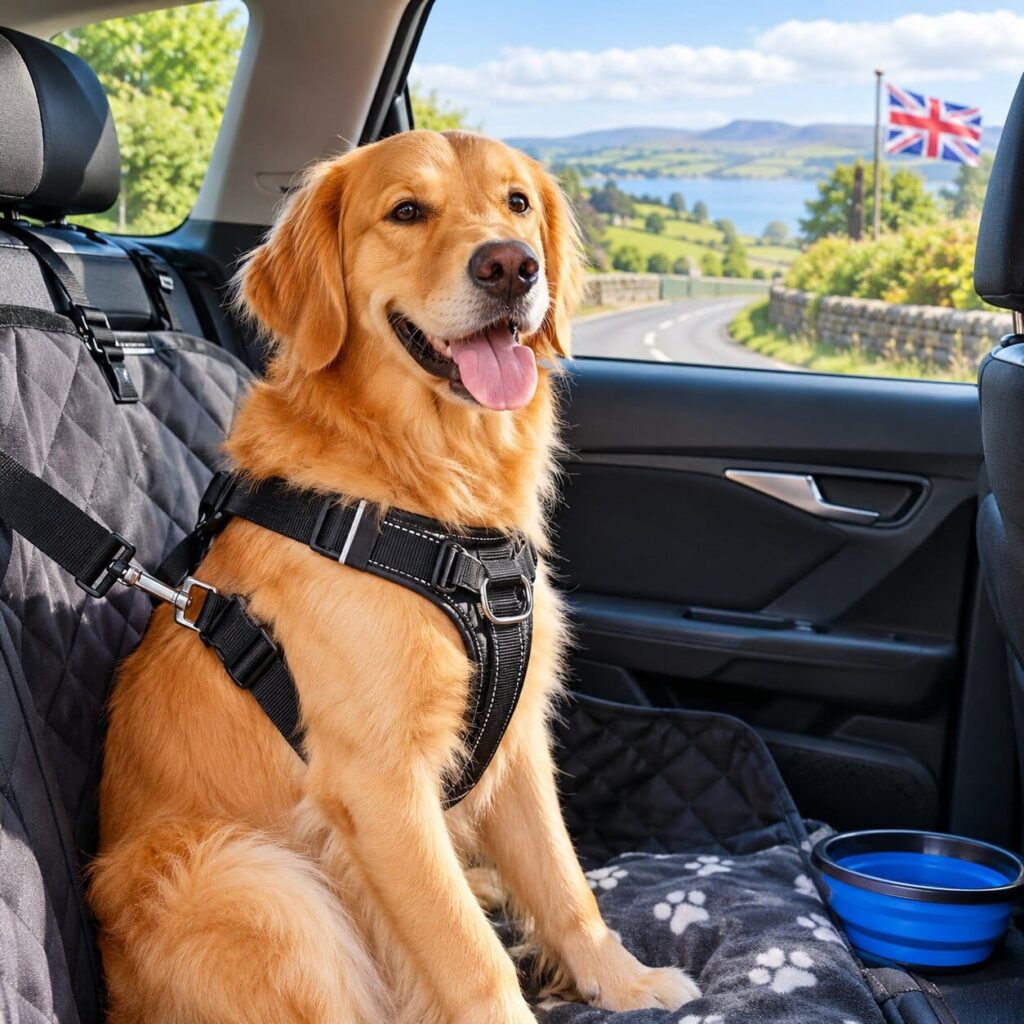
Taking your dog along for a drive sounds simple enough, but there’s more to it than opening the car door and letting them jump in. Dogs can get excited, nervous or restless in a vehicle, and an unsecured pet can become a distraction when you’re trying to concentrate on the road.
Whether you’re driving a few miles to the vet or heading off on a long weekend, safe dog car travel starts with proper restraint, good preparation and regular breaks. The good news is that once you’ve found a setup that works for your dog, travelling together becomes much easier.
Is It Illegal to Drive with an Unrestrained Dog in the UK?
The Highway Code says animals travelling in vehicles should be suitably restrained so they can’t distract the driver or injure themselves or others if the vehicle stops suddenly.
For dogs, suitable options can include a properly fitted harness attached to a suitable seat-belt system, a pet carrier, a secure crate or a dog guard.
It’s worth taking this seriously. A dog wandering between the front and back seats isn’t just inconvenient. They could get under your feet, interfere with the controls or move suddenly when you need to brake.
The safest approach is to decide where your dog will travel before starting the engine and make sure they’re secured properly every time.
What Is the Safest Way for a Dog to Travel in a Car?
There isn’t one perfect setup for every dog. The safest choice depends on your dog’s size, temperament and the vehicle you’re using.
For a smaller dog, a secure travel carrier can provide a comfortable space without allowing them to move around the cabin. A larger dog may be more comfortable wearing a suitable car harness on the rear seat or travelling in a properly secured boot area with an appropriate dog guard.
Whatever option you choose, it should be strong enough for your dog and correctly fitted. Don’t wait until you’re halfway through a journey to discover that your pet can wriggle free.
It’s a good idea to test the arrangement on short drives first. That way, your dog has time to get used to it.
Should Dogs Travel in a Crate, Harness or the Boot?
This really comes down to what suits your dog.
A dog car harness can be a practical option for dogs that like sitting beside their owners. It limits unnecessary movement while allowing them to remain in the passenger area.
A travel crate or carrier can work well for smaller dogs, especially those that feel more comfortable in an enclosed space. The crate needs to be secure so it doesn’t slide around when the car turns or stops.
For larger dogs, the boot of an estate car can offer plenty of room. However, a dog shouldn’t simply be left loose in the boot. A suitable dog guard or restraint helps keep them separated from passengers and the driver.
Before choosing equipment, think about your dog’s normal behaviour. A nervous dog may prefer a covered carrier, while a larger, confident dog might settle better with more room.
Can a Dog Sit in the Front Passenger Seat?
It’s usually better to keep your dog in the rear of the vehicle rather than beside the driver.
Even a well-behaved dog can become a distraction. They may try to climb across the seats, look through the windscreen or react to something outside.
Never let your dog sit on your lap while you’re driving. It might seem harmless on a quiet road, but it can quickly become dangerous if you need to brake or make an unexpected manoeuvre.
Keeping your pet properly restrained gives you one less thing to worry about and allows you to focus on driving.
How Can You Keep Your Dog Calm During a Car Journey?
Not every dog is a natural traveller. Some happily jump into the car, while others become anxious as soon as they hear the engine.
If your dog dislikes car journeys, start small. Take them on short drives and gradually increase the distance. Try visiting enjoyable places rather than making every journey end at the vet.
A familiar blanket or toy can also help them feel more settled. Keep the car at a comfortable temperature and avoid sudden loud noises where possible.
Don’t force an extremely nervous dog through a long journey without preparation. If anxiety is severe or your dog becomes repeatedly sick, speak with your vet for suitable advice.
What Should You Do If Your Dog Gets Car Sick?
Motion sickness can make travelling miserable for both you and your dog. Puppies and dogs that aren’t used to travelling can be particularly prone to it.
Signs may include excessive drooling, whining, licking the lips, restlessness or vomiting.
Avoid giving a very large meal immediately before travelling unless you’ve been advised otherwise. Keep water available and give your dog opportunities to rest during longer journeys.
If sickness happens regularly, don’t simply ignore it. Your vet can help work out whether motion sickness, anxiety or another issue is causing the problem.
How Often Should You Take Breaks When Driving with a Dog?
A long car journey should include sensible rest stops. Dogs need opportunities to stretch their legs, drink water and go to the toilet.
There’s no fixed schedule that works for every dog. A young puppy may need more frequent breaks than a healthy adult dog, while older dogs may also appreciate additional opportunities to move around.
Plan your route before leaving and look for safe places where you can stop. Keep your dog on a lead when getting out of the vehicle and make sure they’re secure before opening the car door.
A few extra minutes at a safe stopping point can make a big difference to the rest of the journey.
What Should You Pack for a Dog Car Journey?
You don’t need to fill the entire boot with pet supplies, but a few essentials are worth keeping within easy reach.
Take fresh water, a travel bowl, your dog’s lead and collar, food, treats and waste bags. A towel or familiar blanket can also come in handy, particularly if your dog gets wet or muddy during a stop.
For longer journeys, bring any medication your dog normally needs and make sure their identification details are up to date.
It can also be useful to keep cleaning supplies in the car. Accidents happen, especially when travelling with puppies or nervous pets.
How Can You Keep Your Dog Comfortable During Long Journeys?
Safety is important, but comfort matters too. Your dog should have enough space within their secured area to sit, stand and change position naturally.
Make sure there’s adequate ventilation and avoid letting the vehicle become excessively warm. Never leave a dog unattended in a parked car when temperatures could become dangerous.
On longer trips, try to maintain a familiar routine. Regular breaks, water and a calm environment can help your pet settle.
If you’re travelling during summer, consider setting off during cooler parts of the day where practical.
Is Safe Dog Car Travel Different for UK and European Journeys?
A longer journey across the UK requires preparation, but travelling from the UK to Europe can involve additional pet travel requirements.
Depending on your destination, you’ll need to check requirements relating to microchipping, rabies vaccination, documentation and approved travel arrangements. These rules can change, so always check the latest official guidance before travelling.
If driving hundreds of miles isn’t practical, UK and Europe Pet Taxi can be an alternative for owners looking for professional pet transportation between the UK and European destinations.
What Is the Best Way to Prepare Your Dog for a Road Trip?
Don’t leave everything until the morning you plan to travel.
Introduce your dog to their harness, carrier or crate beforehand. Take a few shorter drives and see how they respond. If they settle comfortably, gradually increase the journey time.
It’s also worth checking your route, planning rest stops and packing your dog’s essentials the night before.
A little preparation goes a long way. Once your dog understands that getting into the car doesn’t have to be stressful, longer journeys can become much easier.
Final Thoughts
Travelling with a dog doesn’t have to be difficult. The basics are straightforward: use suitable restraint, prevent driver distraction, provide ventilation, keep your dog comfortable and take sensible breaks.
Whether you’re heading across town or planning a longer road trip, putting your dog’s safety first helps create a calmer journey for everyone. Get the setup right, practise with shorter trips and plan ahead, and car travel can become just another comfortable part of your dog’s routine.