

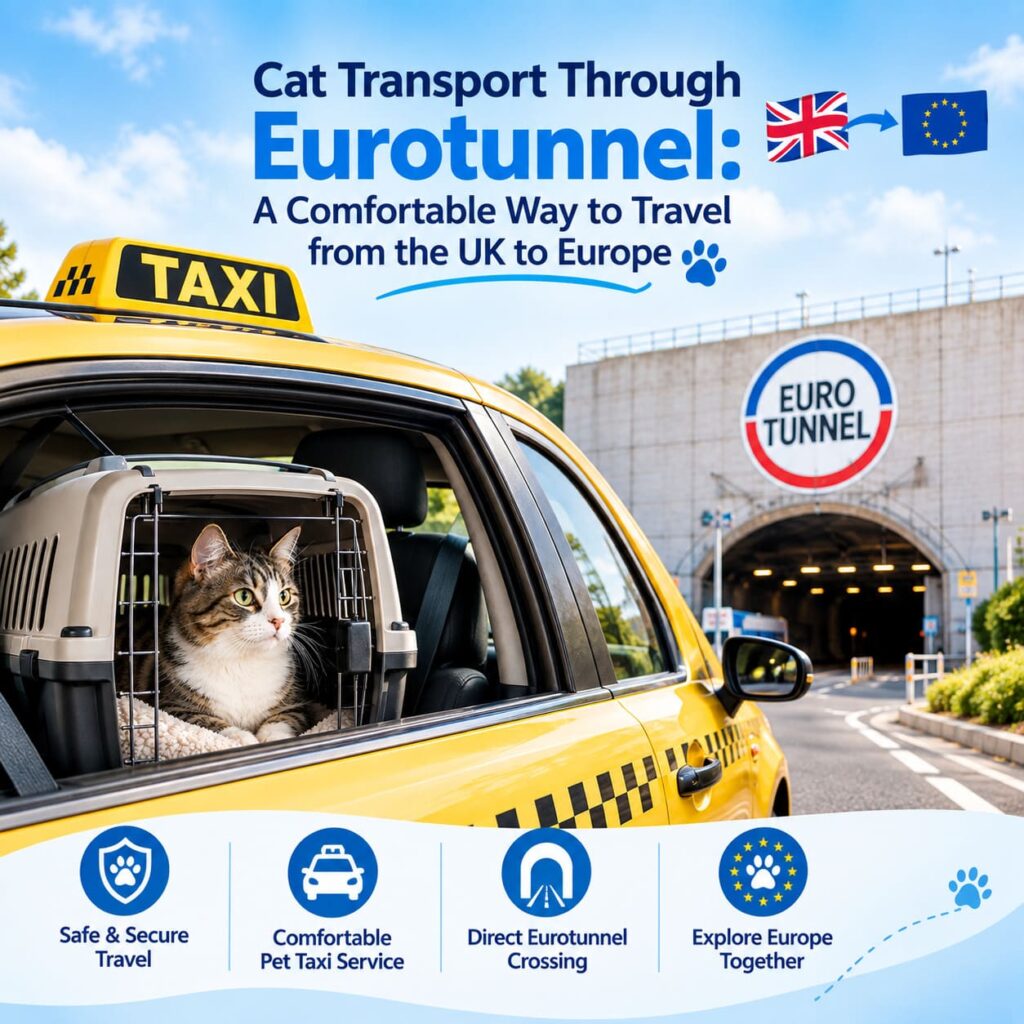
Moving a cat from the UK to Europe isn’t something most owners take lightly. Cats can be sensitive to changes in their surroundings, and a journey that involves several hours on the road, a Channel crossing and a new destination needs a little thought.
The good news is that the right preparation can make the experience much easier.
For owners travelling between the UK and France, Eurotunnel LeShuttle offers a convenient option because pets can remain in the vehicle during the Channel crossing. This means there is no need to move your cat onto a passenger ferry or handle them repeatedly during the crossing.
Whether you’re relocating your cat, moving house or arranging a longer European journey, the aim should always be simple: keep your cat secure, comfortable and calm from collection to arrival.
Can Cats Travel Through the Eurotunnel?
Yes. Cats can travel through Eurotunnel when they meet the applicable pet travel requirements.
Before travelling from Great Britain to an EU country, owners need to make sure their cat has the correct identification, vaccination and travel documentation. Current GOV.UK guidance says cats travelling from Great Britain to the EU generally need a microchip, valid rabies vaccination and an Animal Health Certificate.
The paperwork is just as important as the journey itself. Requirements can vary depending on where you’re travelling, so it’s sensible to check the latest official guidance before booking your trip.
Why Choose Eurotunnel for Cat Travel?
Cats usually cope better when their surroundings remain familiar.
A ferry journey, airport transfer or several changes of transport can mean more noise, handling and unfamiliar smells. With Eurotunnel, your cat can remain in the vehicle during the Channel crossing, which can make the overall experience simpler.
For an owner travelling from London, Birmingham, Manchester or another part of the UK to France, the main journey can therefore be planned as one continuous road trip with the Eurotunnel crossing included.
Of course, the Channel crossing is only one part of the journey. A cat travelling from a home in northern England to Paris, for example, may still spend many hours on the road. That’s why preparation matters.
How Can You Prepare Your Cat?
Don’t wait until the morning of travel to introduce the carrier.
A few weeks beforehand, leave the carrier somewhere your cat already feels comfortable. Keep the door open and put a familiar blanket inside.
Allow your cat to investigate it in their own time.
Once they are comfortable entering the carrier, start practising short journeys by car. A quick trip around the local area can help your cat become familiar with the sounds and movement of travelling.
Gradually increase the journey length rather than going straight from no travel experience to a full international trip.
What Should Your Cat Travel In?
A strong, secure carrier is essential.
Your cat should have enough room to stand, turn around and lie down comfortably. The carrier should also have good ventilation and a secure door.
Place familiar bedding inside to provide a recognisable smell.
During the drive, make sure the carrier is properly secured so it cannot slide or tip when the vehicle brakes or turns.
If your cat becomes unsettled by seeing traffic and unfamiliar surroundings, a breathable cover over part of the carrier may help. Never block the ventilation openings.
What About Food, Water and Medication?
Every cat is different, so there isn’t one feeding routine that suits every journey.
Some cats become nauseous when travelling, while others have no problems at all. If your cat has previously suffered from motion sickness or becomes extremely anxious in the car, speak with your vet before travelling.
The same applies to medication. Never give your cat human medicine or calming medication without veterinary advice.
Take enough food and water for the entire journey, along with any prescribed medication your cat normally needs.
It’s also worth carrying spare bedding, absorbent pads, litter supplies and cleaning materials. A small amount of preparation can save a lot of trouble if your cat has an accident during the drive.
Professional Cat Transport for UK to Europe Journeys
Not every owner wants to drive hundreds of miles across Europe with a cat in the car.
You may be moving abroad, relocating for work, returning to France or simply unable to manage a long-distance journey yourself.
This is where professional cat transportation can make things easier.
A specialist service can organise the journey around your cat’s needs, from collection in the UK to the Channel crossing and onward travel to the destination.
UK and Europe Pet Taxi offers a practical option for owners who need door-to-door pet travel between the UK and European destinations.
This type of service can be particularly useful for cats that need careful handling throughout a long journey.
Door-to-Door Cat Relocation
One of the biggest advantages of door-to-door transport is that it reduces unnecessary transfers.
Your cat can be collected from the agreed location and transported directly towards the final destination rather than being moved between several unrelated transport providers.
Depending on the route, this can be useful for:
- UK to France cat transport
- France to UK pet travel
- Paris to London journeys
- Cat relocation to Europe
- Long-distance UK cat transport
- Airport or station collections
- Private pet transportation
The exact journey depends on the collection point, destination and travel arrangements.
What Documents Does Your Cat Need?
Documentation depends on the direction of travel and the countries involved.
For a cat travelling from Great Britain to an EU country, GOV.UK currently states that an Animal Health Certificate is required, along with the relevant microchip and rabies vaccination requirements. An AHC issued for EU entry is valid for 10 days after issue for entry, and can then cover onward EU travel and re-entry to Great Britain for up to 6 months, subject to the stated conditions.
If you’re returning to Great Britain from an EU country, different documentation rules apply, and an EU-issued pet passport can be accepted in eligible circumstances.
Because these requirements can change, always check the official rules for your specific route before travelling.
Helping Your Cat Settle After Arrival
Once you reach your destination, give your cat some quiet time.
Prepare a comfortable room with food, water, a litter tray and familiar bedding. Open the carrier and allow your cat to come out when they’re ready.
Don’t rush them into exploring the whole house.
If you’ve moved to a new property, outdoor access should also be delayed until your cat has had time to settle and recognise the new surroundings as home.
A Better Way to Plan Cat Travel
A successful international cat journey isn’t about rushing from one location to another. It’s about removing unnecessary stress wherever possible.
Get the paperwork organised early, introduce the carrier before travel day, keep the journey secure and allow your cat time to adjust after arrival.
For owners who don’t want to manage a long international drive themselves, professional cat transport provides another option for moving a cat safely between the UK and Europe.
With sensible preparation and the right travel arrangements, even a long journey through the Eurotunnel can be a much more manageable experience for both you and your cat. Read more: Pet Relocation UK to Europe