

Taking your cat on a journey isn’t always easy. Some cats settle down quickly, while others get nervous as soon as they see a carrier. Add a long drive, unfamiliar places and possibly an international journey, and it’s easy to see why preparation matters.
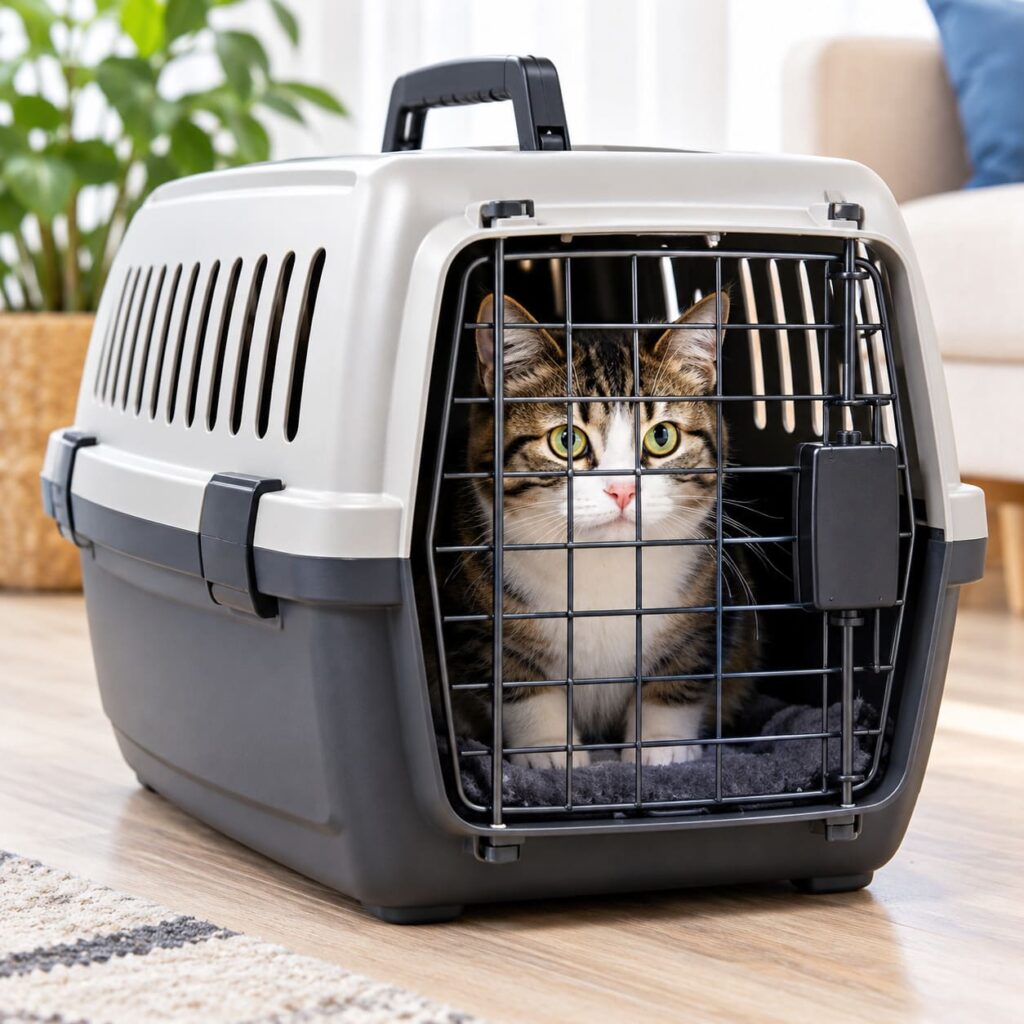
One of the first things to sort out is a secure cat carrier. A good carrier gives your cat a safe space during the journey and also gives you peace of mind when travelling.
Whether you’re taking your cat to the vet, moving house or planning a longer trip from the UK to Europe, choosing the right carrier can make the whole experience much easier.
What Makes a Cat Carrier Secure?
A carrier needs to do more than simply hold your cat. It should keep your pet safely inside while being strong enough to handle normal movement during travel.
Look for a carrier with a solid construction, a reliable door and a locking system that your cat can’t easily push open. Good ventilation is important too. Your cat needs plenty of fresh air, especially during a long journey.
Size matters as well. A carrier shouldn’t be so small that your cat feels cramped. Ideally, your cat should be able to stand, turn around and lie down without difficulty.
At the same time, avoid choosing one that’s excessively large. A carrier that’s too spacious can allow your cat to slide around when the vehicle is moving.
How Do You Choose the Right Carrier for Your Cat?
There’s no single carrier that’s perfect for every cat. Think about your cat’s size, personality and the type of journey you’re planning.
For a short trip, a standard sturdy carrier may be all you need. For long-distance cat travel, however, it’s worth paying more attention to comfort, ventilation, cleaning and overall durability.
If your cat tends to become nervous, an enclosed carrier may help it feel more protected. Some cats feel calmer when they can’t see everything happening around them.
A strong base is also useful. If your cat has an accident during the journey, a carrier that’s easy to clean will save you a lot of hassle.
Why Is a Secure Carrier Important on Long Journeys?
Cats can react differently when they’re outside their normal environment. Traffic, loud sounds, strange smells and movement can make even a normally relaxed cat nervous.
That’s why a secure carrier is particularly important during long-distance journeys. It gives your cat a familiar, contained space instead of allowing it to move freely around a vehicle.
Never let your cat travel loose inside a car. If it becomes frightened, it could hide under a seat, interfere with the driver or try to escape when a door is opened.
The carrier should also be kept stable during the journey. It shouldn’t be left somewhere it can slide, tip over or become exposed to direct sunlight for long periods.
How Can You Make the Carrier More Comfortable?
A carrier doesn’t have to feel like a strange object to your cat.
Try leaving it somewhere familiar before the journey. Keep the door open and let your cat investigate it in its own time. You can put a favourite blanket or familiar bedding inside to make it feel more like a normal resting place.
If you’ve got plenty of time before travelling, encourage your cat to spend short periods inside the carrier. Gradually increasing the time can help it become more comfortable with the idea.
Don’t wait until the day of travel to introduce the carrier. That’s likely to make the experience more stressful.
What Should You Put Inside the Carrier?
Keep things simple. Your cat needs enough room to move comfortably, so don’t fill the carrier with unnecessary items.
A familiar blanket is often a good choice. For longer journeys, absorbent bedding can also be useful in case of an accident.
Depending on the length of the trip, you may need water, food and cleaning supplies. Your approach should be based on the journey time and your cat’s individual needs.
Avoid putting hard or bulky objects inside that could move around while the vehicle is travelling.
Travelling With a Cat From the UK to Europe
If you’re relocating your cat from the UK to Europe, there are a few more things to think about beyond the carrier itself.
Travel documentation, microchip details, vaccinations and other requirements may apply depending on your destination and the current travel rules. Requirements can change, so it’s sensible to check the latest official guidance before setting off.
The journey itself should be planned around your cat’s comfort too. A busy terminal, unfamiliar surroundings and long periods of travel can be tiring for a pet.
Keeping your cat safely inside a reliable carrier reduces the chance of an escape and makes each stage of the journey easier to manage.
How Should You Prepare Your Cat Before Travel?
Give yourself plenty of time.
Start by letting your cat get used to the carrier. Leave it in a familiar part of the home and allow your cat to enter and leave freely.
You can then try short journeys if your cat is comfortable with them. This gives you an opportunity to see how your pet reacts before attempting a much longer trip.
If your cat becomes extremely anxious during travel, speak to your vet before making plans. Your vet can give advice based on your cat’s health and individual temperament.
It’s also worth preparing everything in advance. Check your travel documents, plan your route and make sure the carrier is clean, secure and ready to use.
Professional Cat Travel in the UK and Europe
For a long-distance or international journey, arranging professional pet transport can take some pressure off your shoulders.
UK and Europe Pet Taxi provides pet transportation within the UK and for journeys between the UK and Europe. Professional handling can be particularly useful when a cat needs to travel a significant distance and the owner wants the journey to be managed carefully.
A good carrier is still an important part of the process, but it’s only one piece of the puzzle. Safe handling, a suitable vehicle environment and sensible journey planning all matter.
Final Thoughts
Choosing a cat carrier is a small step that can make a big difference to your cat’s travel experience.
Look for a carrier that’s strong, well ventilated, escape-resistant and comfortable enough for your cat to stand, turn and rest. Get your cat familiar with it before the journey rather than introducing it at the last minute.
If you’re travelling from the UK to Europe, take time to check the current travel requirements and prepare your documents in advance. With a little planning, the journey can be safer, calmer and far less stressful for both you and your cat.