

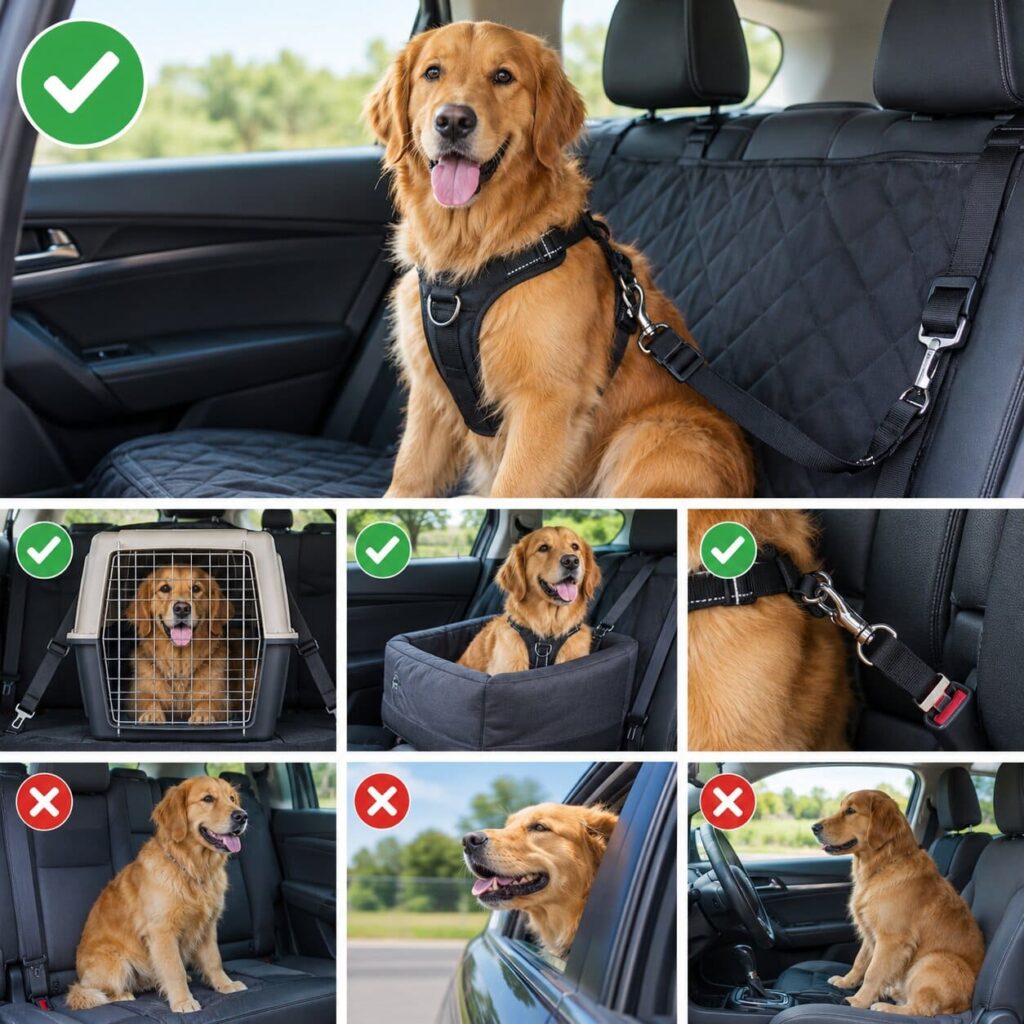
For many dogs, a car ride is either an exciting adventure or something they’d rather avoid. Some will happily jump into the back seat, while others may start shaking as soon as they hear the engine.
Whatever your dog’s reaction, safety should come before everything else. Whether you’re making a quick trip to the vet, visiting friends, or setting off on a long-distance journey, your dog needs to be properly secured and comfortable. A little preparation before you leave can prevent accidents, reduce stress, and make the whole trip easier for both of you.
Why Safe Car Travel Matters for Your Dog
What Can Happen When a Dog Travels Unrestrained?
It’s tempting to let a calm dog sit wherever they like, especially on a short drive. The trouble is that even a well-behaved dog can become a problem in an emergency.
If you brake suddenly, an unsecured dog can be thrown forward. They could hit a seat, the dashboard, another passenger, or even the windscreen. There’s also the risk of your dog moving into the driver’s area and causing a distraction.
That’s why your dog should have a dedicated, secure place in the vehicle. A suitable harness, travel crate, or dog guard can help keep them where they need to be.
Recognising Travel Anxiety and Motion Sickness
Not every dog enjoys travelling. Puppies may need time to get used to the movement, while some older dogs can become uncomfortable during longer journeys.
Keep an eye out for signs such as:
- Whining or barking
- Shaking
- Heavy panting
- Excessive drooling
- Restlessness
- Refusing to settle
- Vomiting
If your dog regularly becomes sick or extremely anxious in the car, it’s worth talking to your vet. There may be ways to make future journeys easier.
Choosing the Right Safety Equipment
Dog Harnesses and Seat-Belt Restraints
A properly fitted travel harness can give your dog some freedom to sit or lie down while stopping them from moving around the vehicle.
Make sure the harness is designed for car travel and fits your dog correctly. It shouldn’t be so tight that it’s uncomfortable, but it shouldn’t be loose enough for your dog to slip out either.
Avoid attaching a restraint directly to a collar. If the car stops suddenly, the force could put unnecessary pressure on your dog’s neck.
Travel Crates and Cages
A sturdy crate can be a good option for dogs that are comfortable travelling in enclosed spaces.
Your dog should be able to stand, turn around, sit, and lie down without feeling cramped. Put familiar bedding inside to make the crate feel more like their own space.
Just as importantly, the crate needs to be secured properly inside the vehicle. A crate that’s allowed to slide around isn’t providing the protection you want.
Dog Guards and Barriers
If you have a larger dog and a suitable vehicle, a properly fitted dog guard can create a secure area in the rear.
This arrangement allows your dog to move around a little without giving them access to the front seats. A barrier can also be useful for preventing your dog from jumping between the front and back of the car.
Before every trip, check that the guard or barrier is firmly attached and hasn’t become loose.
Preparing Your Dog Before the Journey
Make the Car Feel Familiar
A strange environment can make an already nervous dog even more unsettled. Bringing something familiar from home can help.
A favourite blanket, bed, or toy may give your dog a sense of security.
If your dog is afraid of the car, don’t immediately take them on a three-hour road trip. Start by letting them sit in the parked vehicle for a few minutes. Once they’re comfortable, try turning the engine on without going anywhere.
From there, build up slowly with short drives.
Think About Food and Water
A heavy meal just before travelling isn’t ideal, especially if your dog tends to suffer from motion sickness.
If your pet has a sensitive stomach, feeding them a few hours before travelling may help. Don’t make sudden changes to their normal feeding routine without a good reason.
For longer journeys, carry plenty of fresh water and offer it during breaks.
Start with Short Trips
If your dog isn’t used to travelling, short practice journeys can make a world of difference.
Take a ten-minute drive around the neighbourhood before gradually moving on to longer trips. Keep things relaxed and avoid making every car journey stressful or overwhelming.
Over time, your dog may begin to understand that getting into the car isn’t something to worry about.
How to Keep Your Dog Safe During the Journey
Keep the Temperature Comfortable
Dogs can struggle with heat, particularly when the weather is warm. Make sure your vehicle has adequate ventilation and isn’t becoming uncomfortably hot.
Avoid placing your dog in direct sunlight for long periods and check on them during the journey.
Most importantly, never leave your dog alone inside a parked car. Even when the weather doesn’t seem particularly hot, the temperature inside a vehicle can rise quickly.
Take Regular Breaks
If you’re travelling for several hours, don’t expect your dog to stay comfortable the entire time without a break.
Stop regularly so your dog can:
- Stretch their legs
- Have some water
- Go to the toilet
- Relax for a few minutes
Always attach your dog’s lead before opening the car door. A dog that’s frightened or excited in an unfamiliar place can bolt surprisingly quickly.
Keep Your Dog Away From the Driver
It might be cute to have your dog sitting beside you, but it’s not a safe setup.
Your dog shouldn’t sit on your lap, climb onto the dashboard, or move between the front seats while you’re driving. Even a few seconds of distraction can have serious consequences.
Before setting off, make sure your dog is secured and everything you’ll need is packed away safely.
Things You Should Never Do When Travelling With a Dog
Don’t Let Your Dog Stick Their Head Out of the Window
Dogs often seem to love having their heads out of the window. Unfortunately, there’s more to worry about than just the wind.
Dust, stones, insects, and other debris can hit your dog’s eyes or face. Your pet could also become startled by something outside the vehicle.
It’s safer to keep your dog inside the vehicle and properly restrained.
Never Leave Your Dog in a Parked Car
This one is worth repeating.
Don’t leave your dog alone in a parked car while you go into a shop, café, or service station. Opening the windows slightly doesn’t remove the risk.
If your destination isn’t suitable for dogs, make alternative arrangements rather than leaving your pet in the vehicle.
Don’t Allow Your Dog to Travel Loose
Even dogs that normally behave perfectly can react differently when they’re frightened or excited.
Keeping your dog secure isn’t about restricting them unnecessarily. It’s about creating a safer environment for your pet, passengers, and everyone else on the road.
Preparing for a Long-Distance Dog Journey
A longer trip requires a little more planning. Before you leave, make sure you’ve packed everything your dog may need.
A useful travel bag could include:
- Fresh water
- Food and treats
- Food and water bowls
- Lead and collar or harness
- Spare lead
- Waste bags
- Bedding
- Favourite toy
- Medication
- Cleaning supplies
- Relevant travel documents
It’s also a good idea to check your route beforehand. Knowing where you can stop for a proper break means you won’t have to search for somewhere suitable at the last minute.
If you’re travelling across borders, check the latest pet travel requirements well in advance. The paperwork and health requirements can vary depending on where you’re travelling.
When Professional Dog Transport Makes Sense
Sometimes, taking your dog yourself just isn’t practical.
Perhaps you’re moving house, travelling a long distance, don’t have a suitable vehicle, or need your dog transported while you’re unable to make the journey. In these situations, professional safe dog transportation services can be a useful alternative.
Experienced pet transport providers can arrange suitable journeys while taking your dog’s comfort and safety into account.
This can be particularly helpful for longer trips within the UK or journeys involving European destinations.
Door-to-Door Dog Transport Across the UK and Europe
For some owners, door-to-door pet transport is simply more convenient.
Rather than arranging several parts of a journey yourself, a professional provider can collect your dog from an agreed location and take them to their destination.
This may be useful when your dog needs to travel between homes, veterinary practices, boarding facilities, or other locations.
International journeys need extra preparation, though. Depending on the destination, you may need to arrange the correct identification, vaccinations, health documentation, and other travel requirements before departure.
Always check the current rules before making an international journey with your pet.
Final Thoughts
Taking your dog on the road doesn’t have to be stressful. Once you’ve got the basics sorted, it’s really quite straightforward.
Secure your dog properly, keep the vehicle comfortable, plan regular breaks, and never leave your pet unattended in a parked car. Those simple steps can make a big difference.
For short trips, the right harness, crate, or dog guard may be all you need. Longer journeys require more planning, especially when travelling across the UK or into Europe.
And when driving the whole distance yourself isn’t realistic, professional pet transport can take some of the work off your shoulders while giving your dog a secure and carefully planned journey.
“`html
“`