

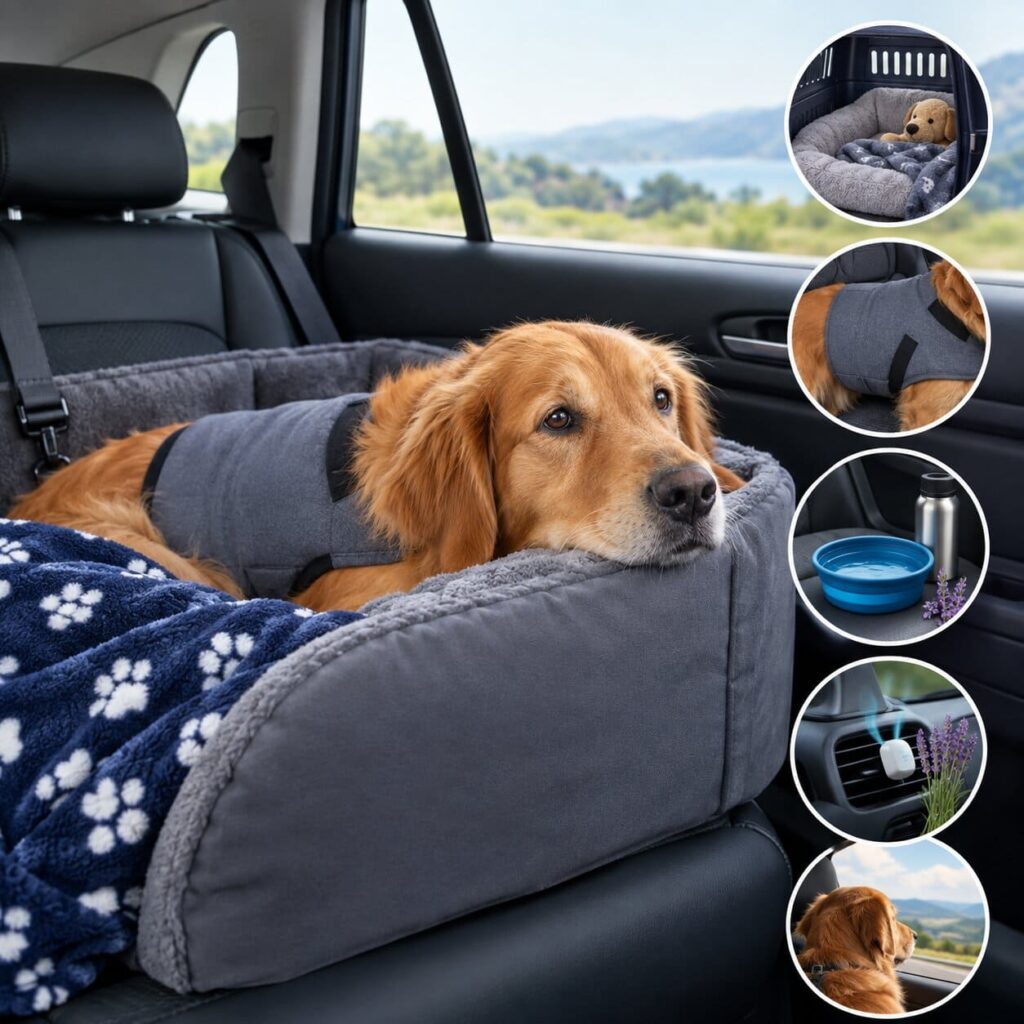
For some dogs, getting into a car is no big deal. They jump in, settle down and seem quite happy watching the world go by. For an anxious dog, though, a long journey can feel like a completely different story.
Whining, panting, shaking, drooling and constant restlessness are common signs that a dog isn’t comfortable with travelling. If you’re planning a long-distance journey across the UK or even travelling between the UK and Europe, taking a little time to prepare your dog can make the experience much easier.
Here are some practical ways to help your dog stay calm and comfortable throughout the journey.
Why Are Some Dogs Nervous About Travelling?
There isn’t always one simple reason why a dog becomes anxious during transport. Some dogs may have had a bad experience in a vehicle before, while others simply don’t like unfamiliar situations.
Motion sickness can also make travelling unpleasant. A dog that has felt sick during previous car journeys may start feeling nervous as soon as they see the vehicle.
Long journeys can be harder because there’s more time spent away from home, surrounded by unfamiliar sights, smells and sounds. That’s why understanding your dog’s behaviour before travelling is so important.
Get Your Dog Used to the Vehicle
If your dog isn’t a confident traveller, don’t wait until the day of the journey to introduce them to a vehicle.
Start small. Let your dog sit in the stationary vehicle for a few minutes and reward calm behaviour. Once they’re comfortable, try a short drive around the local area. Gradually increase the journey length over several trips.
There’s no need to rush this process. Some dogs become comfortable quite quickly, while others need more time. The aim is to help your dog learn that travelling doesn’t always lead to something stressful.
Take Familiar Things From Home
A strange vehicle can feel much less intimidating when your dog has something familiar nearby.
Pack their usual blanket, bedding or favourite toy. Familiar smells can provide comfort when everything else around them is changing.
If your dog has a particular item they normally sleep with, it’s worth taking it along. These little details might seem insignificant, but they can help create a reassuring environment during a long journey.
Keep the Journey Comfortable
Comfort matters just as much as safety when transporting an anxious dog.
Your dog should have enough room to sit, stand and change position comfortably. The vehicle should also have good ventilation and a suitable temperature, particularly during warmer weather.
Avoid making unnecessary changes to your dog’s routine on travel day. Keeping things as familiar as possible can help prevent additional stress.
For particularly long journeys, professional dog transport can be a useful option. Experienced pet transport teams understand that dogs have different temperaments and may need extra patience and reassurance during travel.
Plan Breaks Along the Way
Nobody likes being stuck in one position for hours, and dogs are no different.
Long-distance journeys should include suitable breaks so your dog can stretch their legs, have some water and go to the toilet. A short, calm break can also give them a chance to relax before continuing.
Try not to make stops too hectic. Busy service stations, loud traffic and unfamiliar crowds can sometimes make an anxious dog even more nervous. Where possible, choose quieter and safer places for breaks.
The route should also be planned carefully, particularly when travelling long distances across the UK or through Europe.
Keep Your Voice and Behaviour Calm
Dogs often pick up on the mood of the people around them. If you’re stressed, rushing or constantly worrying about your dog, they may become more unsettled.
Instead, keep your voice calm and your movements relaxed. Speak to your dog normally and give gentle reassurance when needed.
At the same time, don’t make a huge fuss every time your dog shows signs of anxiety. Remaining calm and predictable can help them understand that there’s nothing unusual happening.
Stick to Their Normal Routine
Travel day can be busy, but keeping your dog’s usual routine as much as possible can help.
Give them their normal food rather than suddenly changing their diet. Make sure they have had an appropriate opportunity to go outside before setting off, and take their usual food and water with you.
If your dog regularly experiences severe travel sickness or anxiety, it’s sensible to speak to your vet before a long journey. Your vet can provide advice based on your dog’s individual needs.
Consider Professional Dog Transport
Driving a nervous dog across the country can be challenging, especially when the journey takes several hours. You’re responsible for driving safely while also keeping an eye on your dog’s comfort, planning breaks and dealing with traffic.
A professional dog transport service can take much of that pressure away.
UK and Europe Pet Taxi provides dog transport across the UK and Europe, helping owners arrange journeys with their dog’s safety and comfort in mind. A door-to-door service can also reduce unnecessary changes and transfers, which may be particularly helpful for nervous dogs.
If you’re planning a journey for your pet, you can learn more about the service on the Dog Transport Service in the UK pillar page.
A Calm Journey Starts With Good Preparation
Travelling with an anxious dog doesn’t have to be a stressful experience. The key is to prepare early and think about the journey from your dog’s point of view.
Introduce them to the vehicle gradually, take familiar belongings, plan sensible breaks and keep their routine as normal as possible. Most importantly, don’t assume every dog will react to travel in the same way.
For longer journeys, especially those involving travel between the UK and Europe, having experienced pet transport professionals can make the whole process simpler.
With the right preparation and a little patience, even a nervous dog can have a safer, calmer and more comfortable journey.